Every corporate retreat guide you’ll find is basically a venue list with nice photos—pretty room, good catering, maybe a rooftop. Nobody tells you what to actually do once your team is standing there for two or three days. And that’s the part that decides whether the whole trip was worth it or just an expensive way to leave the office for a weekend. We’ve run a lot of these in Louisville now, more than we can count honestly, and the pattern is always the same. The companies that come back aren’t the ones who found the prettiest space. They’re the ones who figured out the agenda. Pack too much work into the schedule, and it feels like a regular week at the office, just in a different location. Go too far the other direction, and people have a great time, but leave without making any real progress.
The best retreats find the middle ground. They give people enough time to focus, collaborate, and make decisions while still leaving room for conversations, activities, and downtime. The difference usually comes down to the schedule. A few small planning decisions can determine whether the retreat feels productive and memorable or like three days everyone would rather have spent somewhere else.
What You Will Learn
- Why the venue is honestly the easy part of this whole thing
- The rough work-to-connection ratio that keeps people actually engaged
- A two-day and a three-day agenda template, hour by hour
- Where the bourbon trail stops, and team building actually belongs in the schedule
- Why the hardest conversation should never happen on day one morning
- What we handle so you can focus on the agenda instead of logistics
The Venue Isn’t the Hard Part. Sorry.

Every retreat planning article starts with the venue. Find somewhere with good AV, decent breakout rooms, maybe a view. Fine. That part really isn’t hard. Louisville has a lot of solid options, and most of them check those boxes without much trouble.
What’s actually hard is figuring out what happens between 9 AM and 9 PM for two or three days straight with the same 20 to 50 people staring at each other. We’ve watched retreats fall apart in genuinely beautiful venues because nobody thought through the agenda. Either it’s packed wall-to-wall, and everyone’s mentally checked out by 2 PM, or it’s so loose that three days pass and nothing gets decided, and the whole thing feels like a paid vacation that happened to have a couple of meetings stapled to it.
Get the agenda wrong, and the venue doesn’t matter. Get it right, and a converted guesthouse with a decent kitchen will beat a five-star hotel ballroom every single time. We’ve seen it happen both directions enough to say that with a straight face.
The Rough Split That Actually Works
A good retreat needs a balance between work and everything else. We usually recommend a 60/40 split, with about 60% of the time focused on meetings, planning, and workshops, and the other 40% reserved for meals, team activities, and downtime. When the schedule is packed with back-to-back sessions, people check out and start catching up on email. On the other hand, if there isn’t enough structured time, it can feel like an expensive social gathering. The time outside the meeting room is often where the greatest value lies. That’s when conversations happen naturally, relationships get stronger, and people solve problems that never would have come up in a formal presentation. Months later, most people won’t remember every slide from the strategy session, but they’ll remember the conversations that helped them work better together.
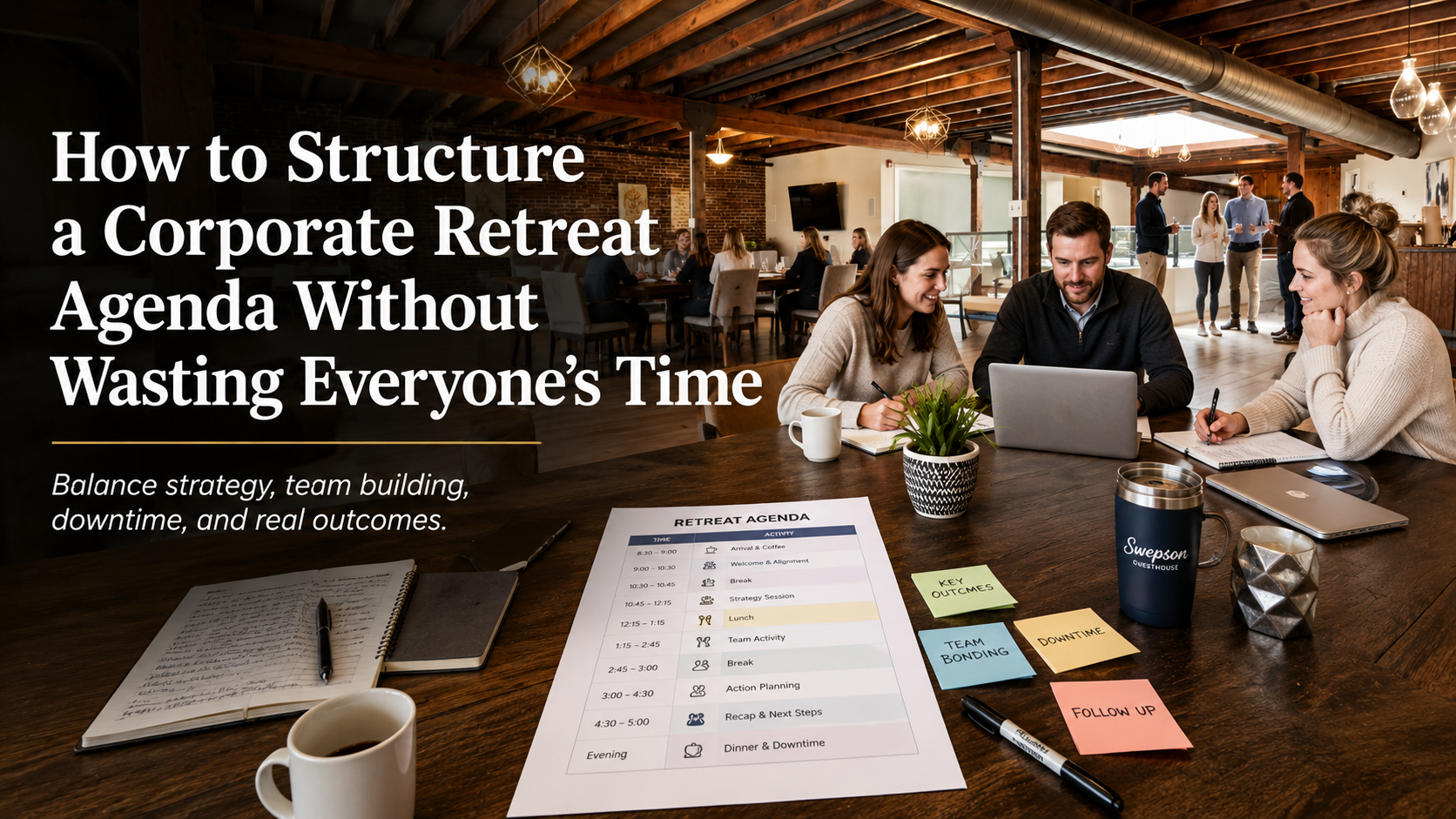
A Two-Day Agenda That Doesn’t Burn People Out
Day one morning is arrival plus a working lunch. Do not, under any circumstances, start with a heavy session the second people land. A working lunch with a light overview gets people oriented without demanding full brainpower, while half the room is jet-lagged or just spent three hours in a car.
Day one afternoon is your heaviest block. Two to three hours of the real work this retreat exists for. Strategic planning, budget stuff, the conversations that are genuinely harder over a video call. Put your most important item here, while people still have energy left.
Day one evening, team building or some Louisville experience. A bourbon tasting, a private dinner, anything that pulls people out of meeting mode. This is where the 40 percent starts doing its work—nothing requiring brainpower after this point, full stop.
Day two morning, lighter. Recap what got decided, assign owners, set next steps. Shorter than day one’s main block, because people are tired and a long session here loses the room fast. You’ll feel it happen if you push too far.
Day two’s afternoon is wrap-up and departure, but if your schedule allows, squeeze in one more low-key activity before everyone scatters. A casual lunch, maybe a quick bourbon trail stop on the way to the airport if flight times cooperate.
Book Your Corporate Retreat Without Wasting Everyone’s Time
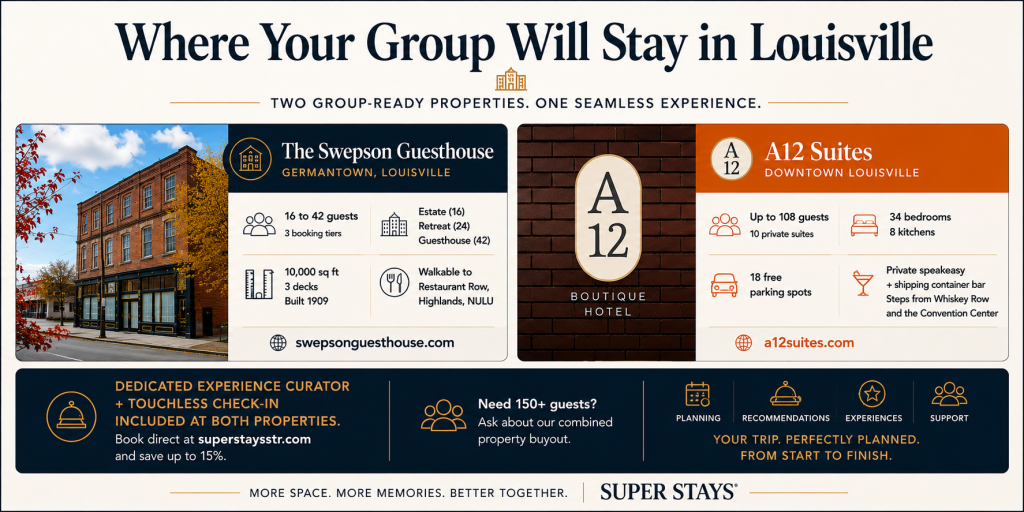
Two Spacious Properties For Your Corporate Retreats – Book Now
A Three-Day Agenda, If You Can Swing It
If the budget allows, adding a third day makes the retreat feel much less rushed.
Use the first day for arrivals, a casual dinner, and time for people to reconnect. Maybe that means exploring a few stops on the Urban Bourbon Trail or simply spending time together at the property. Then start the working sessions on day two when everyone is settled in, rested, and ready to focus.
Day two is your heavy lift, structured basically the same as day one in the two-day version. Morning session, working lunch, the big afternoon block, evening team building. This is the day doing most of the heavy lifting for the whole trip.
Day three is a recap, lighter sessions, and a strong finish. A lot of groups put their bourbon trail day here specifically, because it gives everyone something to look forward to as the retreat winds down instead of ending on some heavy strategic note that nobody wants to think about on the flight home. Depart that evening or the next morning, depending on flights.
Where Bourbon and Team Building Actually Belong

One mistake we see all the time is treating activities outside the meeting room as an afterthought. The distillery tour, bourbon tasting, dinner, or team activity shouldn’t just fill space on the schedule. When timed correctly, they help the retreat run more smoothly.
A private tasting after an afternoon of meetings gives people a chance to relax, continue conversations, and connect in a more natural setting. Ideas that didn’t come up during a formal session often surface when people are sitting around a table with a drink in hand. Put that same activity at the very beginning of the retreat before anyone has spent time together, and it usually doesn’t have the same impact.
The order of events matters. A bourbon tasting at Maker’s Mark or Woodford Reserve can help the group relax and continue conversations after a day of meetings. At the same time, something more active like zip-lining at the Mega Cavern can provide a much-needed reset. The activity itself is less important than when it happens. The best retreats use these experiences to build momentum, not just fill time on the schedule.
One thing that keeps working, almost suspiciously well: put your hardest, most contentious agenda item on the morning after a team-building evening, not the morning right after everyone arrives. People who bonded over bourbon the night before handle a difficult conversation noticeably better than people who just met that same morning. We didn’t expect that pattern to hold as consistently as it has, but it does.
Why Staying Together Changes the Whole Agenda
This is one of the biggest factors in whether a retreat actually works. When people are spread across a hotel, the day usually ends when the last scheduled session wraps up. Everyone heads back to their room, and the group naturally breaks apart.
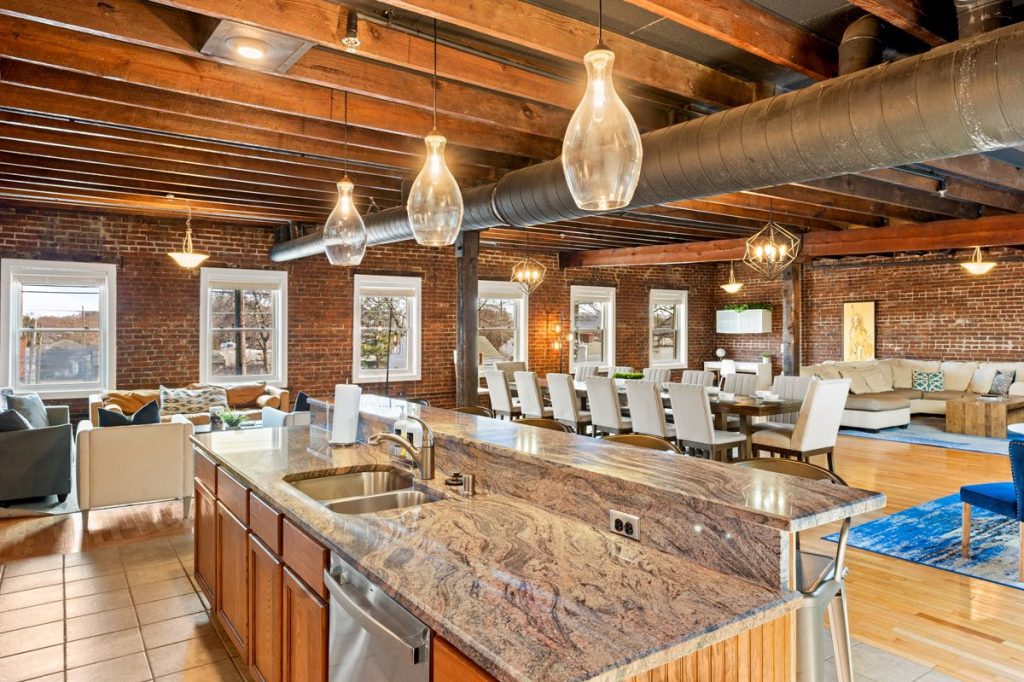
When everyone stays under one roof, the retreat doesn’t end when the last meeting wraps up. Conversations continue over breakfast, ideas come back up in the living room, and relationships get stronger in ways that rarely happen during scheduled sessions. Some of the best discussions happen around a kitchen island or on a patio long after the agenda is finished, and those moments are hard to recreate when everyone heads back to separate hotel rooms.
A property like the Swepson Guesthouse, with breakout spaces, multiple living areas, and a kitchen that fits 42 people, lets you build a slightly lighter formal agenda because you already know real work and real connection will keep happening in the gaps. You don’t have to cram everything into the scheduled blocks. The building does some of the work for you.
Frequently Asked Questions
How many structured work hours should a two-day retreat actually have?
Plan on spending about 5 to 6 hours on structured sessions, with the heavier lifting happening on the first day when everyone is fresh and engaged. A good rule of thumb is a 60/40 balance between work and downtime. That gives the group enough time to make real progress without making the retreat feel like a long day at the office.
Should team building happen before or after the hardest work session?
Almost always, groups who do something fun the evening before a difficult conversation handle it noticeably better than those who go in cold. The shared experience the night before builds just enough trust to make the hard stuff easier the next day.
Is a three-day retreat actually worth the extra cost over two days?
For groups engaged in meaningful strategic work, it’s important to have enough time. A two-day schedule often feels rushed, leaving little room to address major agenda items thoroughly. In contrast, a three-day schedule allows for a more effective process: you can focus on building connections on the first day, tackle the most critical tasks on the second day, and conclude with a strong finish on the third day, rather than being cut short mid-conversation due to travel schedules.
How do you keep a retreat from just feeling like the office with worse Wi-Fi?
Change the physical environment based on the type of work being done. Strategic stuff in one space, casual conversations somewhere else, meals in a totally different room. A property with several distinct living and meeting areas makes this easy without much effort. One hotel conference room for the entire retreat makes every part of the day feel identical, which is a big reason people mentally check out by the afternoon.
Will Super Stays actually help build the agenda, or hand us the keys?
We help build it. Our Dedicated Experience Curators have put together agendas for many corporate groups at this point and know how to sequence work sessions, meals, and Louisville experiences. Hence, the retreat actually delivers on its promise. You bring the strategic items that need to be covered. We help figure out where they go and handle bourbon trail bookings, transportation, and meals around their route.
Build the Retreat People Still Bring Up Months Later
The distinction between a retreat that is frequently referenced in meetings six months later and one that everyone agrees was a waste of the travel budget often lies in its structure. It’s not about the venue. To make a retreat effective, ensure the right balance between work and connection, intentionally sequence difficult conversations rather than leaving them to chance, and select a location that encourages continued interaction among team members between sessions, rather than abruptly ending discussions when everyone returns to their hotel rooms.
We’ve built this structure for a lot of groups in Louisville now, and we know how to make the agenda actually work, not just the room block. Fifteen people or fifty, two days or four, we can help you put something together that your team is still talking about afterward.
Call us at 502-208-8915, email FrontDesk@superstaysstr.com, or schedule a free planning call at superstaysstr.com. Tell us your headcount and your dates. We take it from there.
Limited 2026 availability. Contact us today to secure your preferred dates.
Book Your Corporate Retreat Without Wasting Everyone’s Time
Two Spacious Properties For Your Corporate Retreats – Book Now