
A hotel room block sounds simple. Reserve a pile of rooms, get a group rate, everybody’s happy. Then the contract shows up with words like attrition and cutoff date, and it slowly dawns on you that you might be paying for rooms nobody slept in. If you’re planning a group trip to Louisville, a wedding, a reunion, a team retreat, it’s worth knowing how room blocks really work before you sign anything.
This guide covers what a block is, the questions to ask, what it costs in practice, and when you’re better off skipping it. I’ll also tell you where our own option fits, since we offer the alternative and you should know that going in.
What You Will Learn
- What a room block is, and the difference between a courtesy hold and a contract
- What attrition means in plain English
- The questions to ask before you sign anything
- What a block costs once fees and parking show up
- How timing works in Louisville, from Derby to fall weekends
What a Room Block Is
A room block is a set of rooms a hotel holds for your group at a negotiated rate. Guests usually book into it themselves by using a group name or code. Simple enough. The part nobody explains is that blocks come in two flavors.
A courtesy hold is a soft promise. The hotel sets rooms aside, but there’s little or no financial commitment on your end, and the hotel can release the rooms if it needs them. A contracted block is the real thing. The rate and availability are guaranteed, and in exchange you take on some financial risk if the rooms don’t fill. Most people don’t know which one they’re signing. Ask. And ask what the hotel calls it, because some properties use the words loosely, and the label on the email isn’t what counts. The contract language is.
Attrition, Explained Like a Human
Attrition is the share of your block you’re allowed to leave empty without paying for it. Say you contract 20 rooms and only 14 get booked. Depending on the contract, you may owe the hotel money for some of those six empty rooms. That’s the whole fear behind the word.
The fix is to negotiate it. Push for a low attrition number, ask that it be calculated on rooms actually booked and not the full block, and ask whether the hotel gives you credit if it resells rooms you released. You won’t always win all of it. But hotels expect the conversation, and the person who asks usually gets something.
Questions to Ask Before You Sign
Here’s the list I’d carry into any hotel meeting. What’s the cutoff date, and what happens to unbooked rooms after it? What are the attrition terms? What’s the payment and cancellation schedule? Can the number of rooms be reduced if attendance drops? Can guests change names close to arrival? What comes with the rate, such as breakfast, Wi-Fi, or parking? Are any comped rooms included, and at what ratio? And is every one of those answers written into the contract?
That last one matters most. A friendly phone call means nothing once the invoice shows up. If it isn’t in writing, it isn’t a deal. We go deeper on the negotiating side in our post on how to negotiate group hotel rates, so start there if you want the playbook.
What a Block Costs in Practice
The rate on the page is the smallest part of the bill. Add taxes, nightly parking for every car, resort or amenity fees at some properties, and breakfast if it isn’t included, and a good looking group rate can land right next to the public price. I’d always check what the hotel charges for a single room on the same night before getting excited about a block.
Also watch what happens to people who book late. Once the cutoff passes, the group rate usually disappears, and your cousin who waited until the last week pays more and tells everybody about it. Build the cutoff date into your invitations and repeat it. Twice.
Downtown Louisville adds one more wrinkle, which is parking. Nightly garage fees add up fast when twenty couples each bring a car, so ask whether the hotel offers a group parking rate or a cap. It’s a small line on the quote that turns into a big line on the bill. Also ask about group check in. Nothing sours a wedding weekend like forty people standing at one front desk at 4 p.m. with a single clerk.
The Louisville Timing Problem
Louisville has a few dates that eat hotel space early. Derby weekend sells out first, and for peak dates like that, start three to six months out. Our Kentucky Derby weekend page has more on how that weekend works. Fall is the next crunch, and if you’re coming for the festival, see our post on Bourbon and Beyond group accommodations.
For an ordinary weekend, you have more room, but not as much as you’d guess. Larger groups get fewer good options the later they start. I wouldn’t wait on this one. If your dates overlap a big concert, a race weekend, or a convention, hotels can be tight even in a quiet month, so check the city calendar before you fall in love with a date.
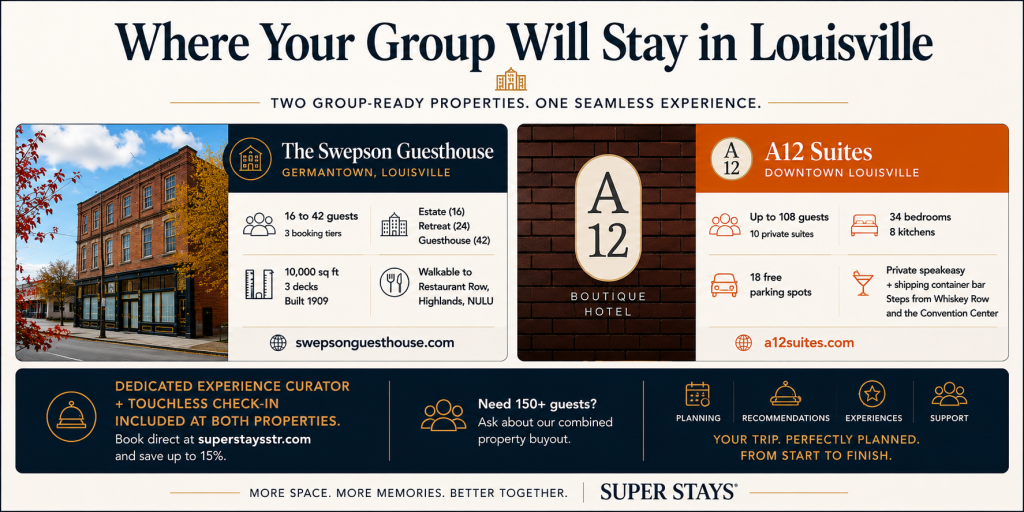
A12 Suites Louisville: Boutique Hotel for Large Groups
Two Spacious Properties For Your Large Groups.
Weddings Are Their Own Mess
Wedding blocks add a whole extra layer of politics. Who pays for the wedding party’s rooms? Do guests cover their own? In most cases guests pay for their own rooms and couples sometimes cover the wedding party, but families handle it differently, so decide early and say it out loud. Our post on who pays for hotel rooms for wedding guests walks through it.
If a wedding is what you’re planning, see our page on wedding group accommodations in Louisville. It’s a place where keeping everyone together can matter more than saving a few dollars a night.
When a Block Makes Sense
A block works well when your guests are independent. Think a wedding with out of town relatives, a conference where attendees book their own travel, or a reunion where everybody wants their own room and their own schedule. You get a group rate, the hotel handles the front desk, and you don’t have to babysit anyone’s check in.
It also works when guests want hotel perks, like a lobby bar, daily housekeeping, or points on their loyalty card. Those are real benefits, and a house can’t match them.
When It Doesn’t
Now the other side. If the point of your trip is being together, a block fights you. Half your group lands on the fourth floor, a few end up on the ninth, and the shared evenings turn into a group chat. You also carry the attrition risk for a group where plans change constantly. Bachelor parties, team retreats, and family trips with a lot of cooking and card games almost always do better under one roof.
We wrote about this from the bourbon side in our post on hotels near the Urban Bourbon Trail, and our corporate retreats page covers the team version.
The One Roof Alternative
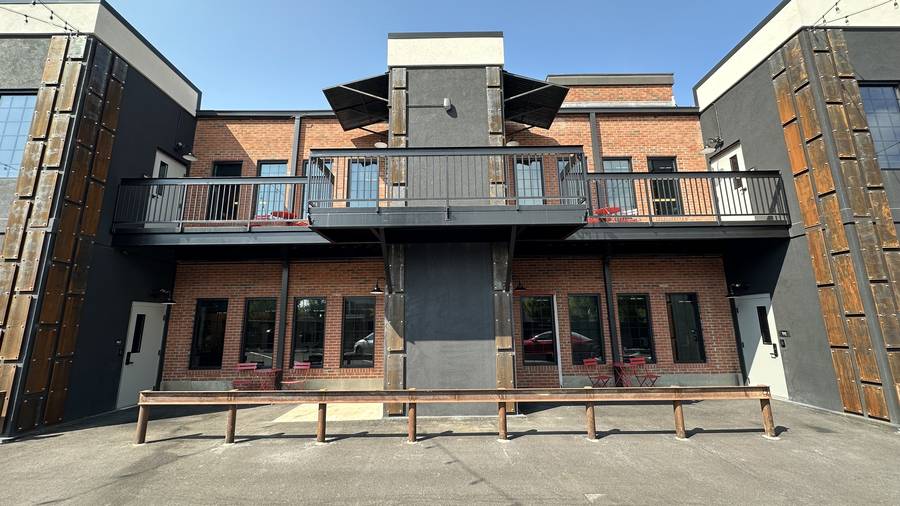
I’ll be upfront. This is where we come in. A12 Suites sleeps up to 108 guests across 34 bedrooms, and the Swepson Guesthouse in Germantown holds 42. Everybody stays in one place, and we handle tours, dinners, and drivers through the Stay Plus Plan.
We aren’t a hotel block, so the contract looks different, and you should ask us for the terms and compare them against any hotel quote in writing. For a wider look at your options, see our guides to places to stay for large groups and large group stays in Louisville, or see everything on our properties page.
Frequently Asked Questions
What is a hotel room block?
It’s a group of rooms a hotel holds for your group at a negotiated rate. Guests usually book into it using a group name or code, and the organizer works out the terms with the hotel.
What is attrition in a hotel contract?
Attrition is the share of a contracted block you can leave unbooked without paying for it. Ask for a low number, calculated on rooms actually booked, and get it in writing.
How far ahead should you book a room block in Louisville?
For peak dates like Derby weekend, start three to six months out. For ordinary weekends, a couple of months is workable, but larger groups should start earlier.
Who is responsible for a room block?
With a contracted block, the organizer usually carries the financial risk if rooms go unbooked, even when guests book and pay individually. Read the attrition and cutoff terms closely.
Is a room block better than renting a house for a group?
It depends on the group. A block suits guests who want their own rooms and schedules. A shared house suits groups who want to spend evenings together, like bachelor parties and team retreats.
Super Stays Bottom Line
A room block can save your group money and hassle, or it can saddle you with a contract you didn’t really read. Know whether it’s a courtesy hold or a contract, push on attrition, and get every answer in writing.
If your group would rather stay together, Super Stays can put everyone under one roof and plan the rest. Tell us your dates and headcount and we’ll send terms you can compare.
Call us at 502-208-8915, email FrontDesk@superstaysstr.com, or schedule a free planning call at superstaysstr.com or a12suites.com. Tell us your group size, your dates, and what kind of trip you’re trying to build. We’ll show you what A12 looks like for your group specifically.
Limited 2026 availability. Contact us today to secure your preferred dates.
A12 Suites Louisville: Boutique Hotel for Large Groups
Two Spacious Properties For Your Large Groups.